
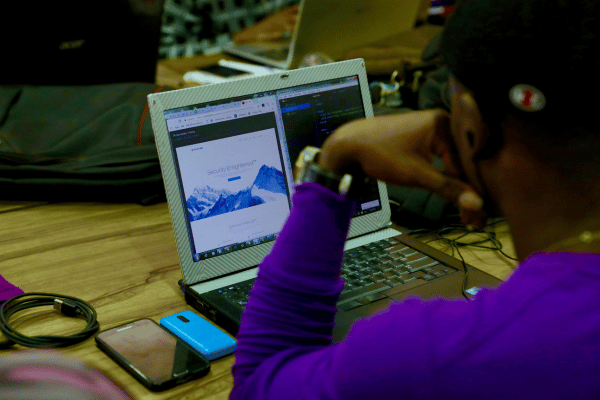
We have the youngest population in the world, but the oldest school infrastructure. Here is the blueprint to bridge that gap.
The image of a “typical Nigerian school” is stuck in 1995. Overcrowded lecture halls at UNN. Chalk dust covering the agbadas of lecturers at ABU. Primary school pupils sitting on bare floors in Lagos because the benches broke in 2018.
We are in a learning crisis. UNICEF says that nearly 75% of children in Nigeria cannot read a simple sentence or solve basic math problems. But here is the plot twist: Nigeria has the youngest, most tech-hungry population on earth.
We don’t need to build more 20th-century schools. We need to build a Smart Learning Future.
Here is the vision—and it is closer than you think.
The Problem Isn’t a Lack of Brains; It’s a Lack of Bandwidth
We cannot pave every road to a rural village in time for 2030. But we can beam a satellite signal there. The smart learning future isn’t about shiny robots; it’s about access.
Currently, a student in Jigawa and a student in Johannesburg have the same smartphone. But the South African student has data to download a physics simulator. The Nigerian student is using his data to watch Nollywood trailers because educational content is too heavy or nonexistent.
The shift: We must move from Bring Your Own Device (BYOD) to Bring Your Own Connectivity.
Pillar 1: The Offline-First Smart Ecosystem (No Data? No Problem)
For a smart future to go viral in Nigeria, it cannot rely on expensive 5G data.
The Vision: Every Secondary School becomes a “Digital Dropsite.” Imagine a solar-powered server in a converted shipping container in the center of a village. This server—let’s call it the NaijaBrainBox—downloads millions of Khan Academy-style videos, past WAEC answers, and coding tutorials via satellite once a week.
Students don’t need internet to watch it. They walk to the school, download the content to their tablets via local WiFi (no data cost), and take it home. It turns the entire village into a classroom.
Why it goes viral: Imagine a TikTok of a girl in Maiduguri teaching herself Python via a pre-loaded app, with zero airtime credit. That is the story we want to tell.
Pillar 2: “AI-Enhanced,” Not “AI-Replaced”
The fear in Nigerian academia is that AI will kill critical thinking. I argue the opposite. AI will save the Nigerian teacher from burnout.
The Vision: A teacher in a public school in Kano has 80 students in a class. Impossible to grade. Impossible to help the slow learners.
Enter Smart Tutor AI (via USSD or simple app). The teacher assigns a topic. The AI grades the essays instantly and identifies that 30 students don’t understand “logarithms.” The teacher doesn’t waste time teaching what students already know; they focus only on the gaps.
The Viral Moment: A tired, overworked teacher breaks down in tears because for the first time in 10 years, the AI gave her a weekend off from marking scripts. We need that human story.
Pillar 3: The Solar Backbone (Away from NEPA)
You cannot have a “Smart Future” if the lights go out every 3 hours. Period.
The Vision: Every Local Government Education Authority (LGEA) building becomes a mini-grid hub. Schools are no longer just places of learning; they are community power banks. Students charge their school-issued tablets via USB-C ports built into the desks—powered by panels on the roof.
The hook: “My school charges my phone for free” is a recruitment tool for enrollment. Parents will send their kids to school just to get their phones charged. That is a Trojan horse for education.
Pillar 4: Gamifying the “Japa” Instinct
We lose our best minds to Canada and the UK. But a smart future keeps them here—remotely.
The Vision: A virtual “Silicon Savannah” for Nigerian teens. Instead of playing Call of Duty, students earn crypto or mobile money by solving real-world problems via gamified learning apps. A 14-year-old in Benin City designs a logo for a business in Dubai via a freelancing simulator within the school curriculum.
The Result: The smart learning future doesn’t just produce graduates; it produces creators who can earn a living from their bedroom in Ajegunle.
The Elephant in the Classroom: The Teacher
We cannot just drop iPads in a village and leave. That is colonialism 2.0.
The smart future upskills the teacher. We create a national “Teacher Tech Corps.” Every teacher gets a tablet preloaded with lesson plans and a monthly data stipend. In return, they track student progress.
When the teacher wins, the student wins. Viral video idea: A 60-year-old grandmother teacher learning to code a basic HTML page alongside her students. That is the respect we need to restore to the profession.
The 3-Step Blueprint to Get There (Now)
We don’t have to wait for the government to do everything. The private sector and youth can force this.
- The “Last Mile” Router: Telecoms (MTN, Glo) need to offer “Education Zero-Rating.” All .gov.ng and .edu.ng sites should be free to access. No data deduction for learning.
- The Rechargeable Desk: A local furniture maker in Onitsha should design a plastic school desk with a built-in battery and USB hub. Sell it to schools for ₦25k. That is a billion-naira idea waiting to happen.
- The Airtime Scholarship: Instead of cash, pay brilliant but poor students in “Data Airtime” to study. Reward screen time that is educational.
The Final Verdict
The vision of a smart learning future for Nigeria is not about replacing the Mallam or the Ma’am with a robot. It is about giving a child in a riverine community the same shot at becoming a software engineer as a child in Ikoyi.
We have the energy. We have the hustle. We just need the will to wire it up.
The world is watching Nigeria. If we solve smart learning here—with our chaos, our no-light, our traffic—we solve it for the entire developing world.
Are you ready to build it? Or are you going to keep waiting for NEPA?
Share this post if you believe in a smart future for Nigeria.
Comment below: What is the first gadget or software you would put in a rural Nigerian school tomorrow?